The two panels look interchangeable, yet they behave differently. A comparison of strength, moisture behaviour, surface and price.
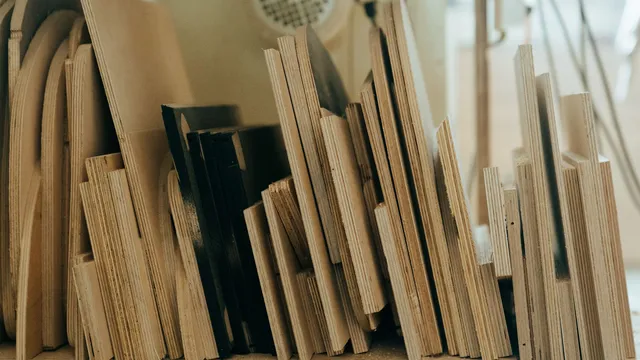
On the pallet the two look alike: a large wooden panel in a standard size. The difference shows up in the job — one is chosen for its surface, the other for its price per square metre.
How they are built
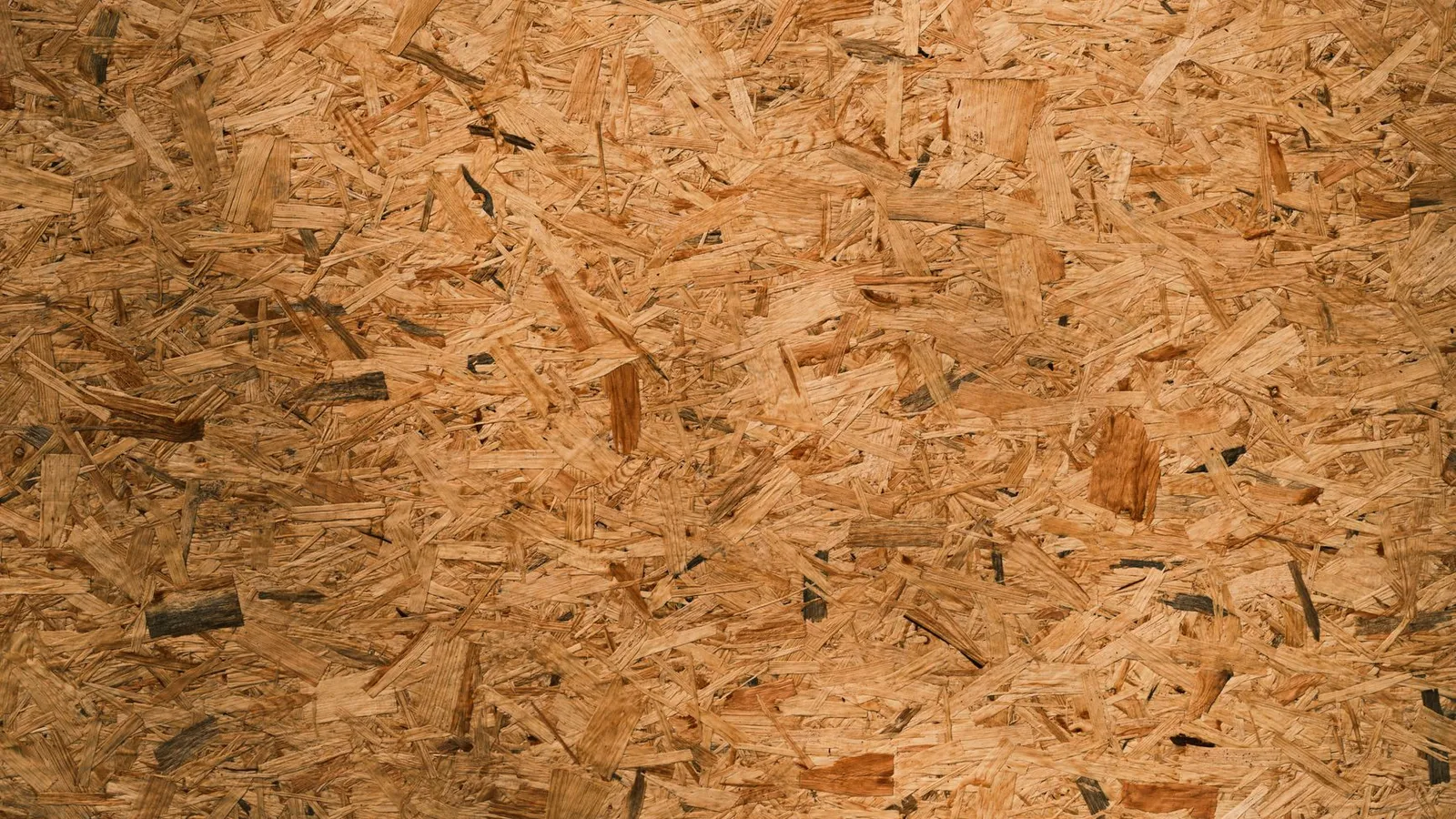
Plywood is glued from whole veneer layers laid crosswise. OSB is made of long wood strands mixed with resin and pressed in three layers: the outer strands run along the panel, the middle layer across it. That makes OSB stronger along its length, and it is why the edge shows the familiar flaked pattern.
OSB classes
- OSB-2 — load-bearing use in dry conditions.
- OSB-3 — load-bearing use in humid conditions. The class you meet most often on site.
- OSB-4 — heavy loads and humidity.
OSB-1 is rare these days: a non-structural board for the hidden parts of furniture.
Point by point
- Strength and stiffness. At the same thickness plywood is stiffer and holds its shape better. OSB is strong but more willing to bend.
- Moisture. Plywood swells slowly and returns close to its original size once dry. OSB swells most at the edges, and that change is permanent — which is why panels are laid with an expansion gap.
- Surface. Plywood can be sanded, varnished and left on show. OSB needs a primer before paint, and the pattern still shows through.
- Holding fasteners. Plywood holds a screw near the edge better; OSB crumbles there more easily.
- Weight and price. OSB usually costs less per square metre, and over a large area that is what decides it.
Reach for plywood when
- The surface will be seen — furniture, interior parts.
- You need accurate geometry or thin sheets from 4 to 10 mm.
- The part is curved; thin plies bend where a strand board will not.
- It is concrete formwork and the same sheet has to work many times.
- It goes into a trailer or a cargo body, where the panel meets moisture and impact.
Reach for OSB when
- You are sheathing a frame and bracing walls.
- It is a floor substrate under laminate or vinyl.
- It is roof decking — OSB-3.
- The structure is temporary: hoardings, fences, packaging.
- A large area has to be covered on a limited budget.
A few things to keep in mind
In damp places the edges of OSB are the weak point: seal them with paint or sealant and leave a ventilation gap. Indoors, check that either panel carries an E1 emission class. And pick the thickness from the span rather than by feel: the further apart the supports, the thicker the panel.
The short answer
If the panel will be seen or will carry a point load, use plywood. If it disappears under a finish and the area is large, use OSB-3. Both are on the shelves at the WOOD POINT store-warehouses in Riga.